
Heading West
And the road trip continues

Day 7
After camping the night in Forestville State Park in Minnesota we woke up to grey sky’s and a light drizzle. By the time we left the park visibility was about 100 yards as we drove through fog and rain. Heading towards Clear Lake, Iowa, we were in the storm for almost two hours. At one point the wind picked up and the rain was coming down in buckets, and I became concerned about flooding and tornados. Luckily we didn’t encounter any of that.
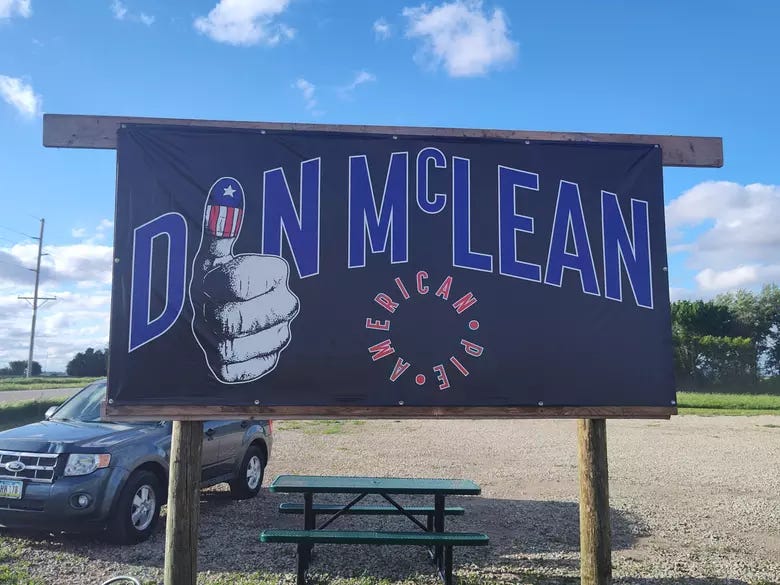
Why stop in Clear Lake, Iowa? This is the location of the small plane crash that killed Buddy Holly, Richie Valens, J.P. Richardson, also known as the Big Bopper, and pilot Roger Peterson. On Feb 3, 1959 the three musicians, wanting to avoid a long, cold bus ride, chartered a plane to take them to their next show in Moorhead, MN. The plane took off from Mason City, Iowa and made it about 15 miles before crashing into a farmers corn field in Clear Lake. Park you car in the “Don Maclean parking lot”, then cross the street. There you’ll find a giant pair of glasses that replicate those Buddy Holly was famous for. If you walk the half mile out to the actual crash site, you’ll come upon another tribute to the four men who died. In town you’ll find a memorial to the musicians, where you can hear their music and information about their work.


Oh, and in case you don’t know, Don Mclean wrote the song “American Pie”. The song is associated with the plane crash with lyrics in the song referring to the awful event as “the day the music died”. Apparently the people who set up the crash memorial purchased a small piece of land across from to the site to be used as a parking lot. They contacted Mclean and he agreed to have his name used on the sign in the parking lot.
Our trip was suppose to continue west today, but the rain and gray skies became too much. Since we were only about 100 miles from Sharon’s house, we decided to go back there for the night. So the rest of the day will be spend washing clothes, restocking essential items (such as beer), and planning our future stops.
Day 8
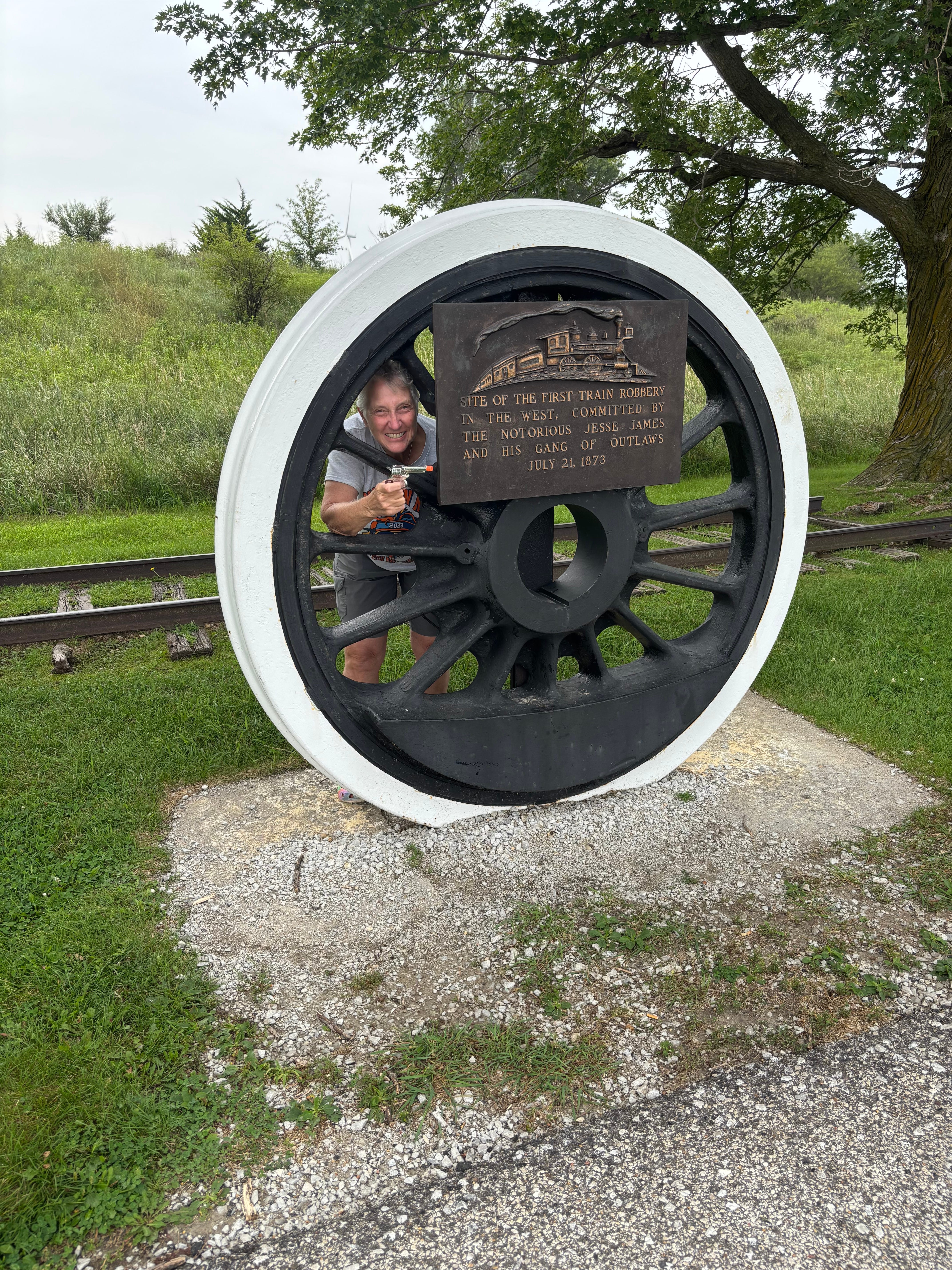
The rain finally stopped! We headed west from Des Moines this morning. Our first stop was the small town of Anita. There we found a sign commemorating the site of the first train robbery committed by Jesse James and his gang in 1873. There’s even a piece of the railroad track - not sure if the track is original or not.
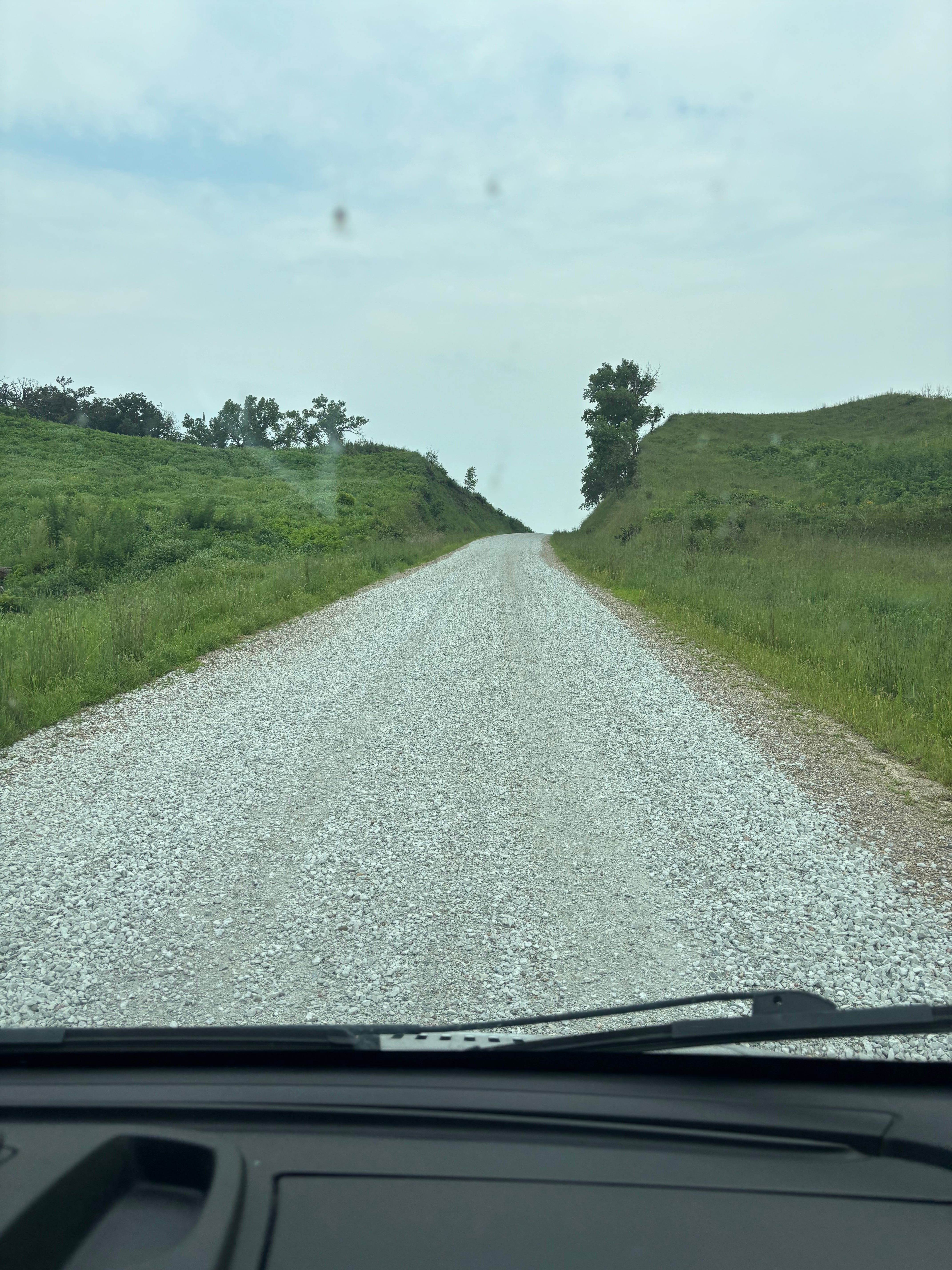
Next excursion - driving through western Iowa in the area known as the Loess Hills. The hills were formed by wind-deposited loess soil. What is loess soil you ask? Well, it is a unique type of wind-deposited sediment primarily composed of silt-sized particles. It's typically yellowish-brown, porous, and easily eroded when wet, but remarkably stable when dry. Loess is known for its fertility, making it a valuable resource for agriculture. This is why the hills are covered with corn and soybean plants for as far as the eye can see.
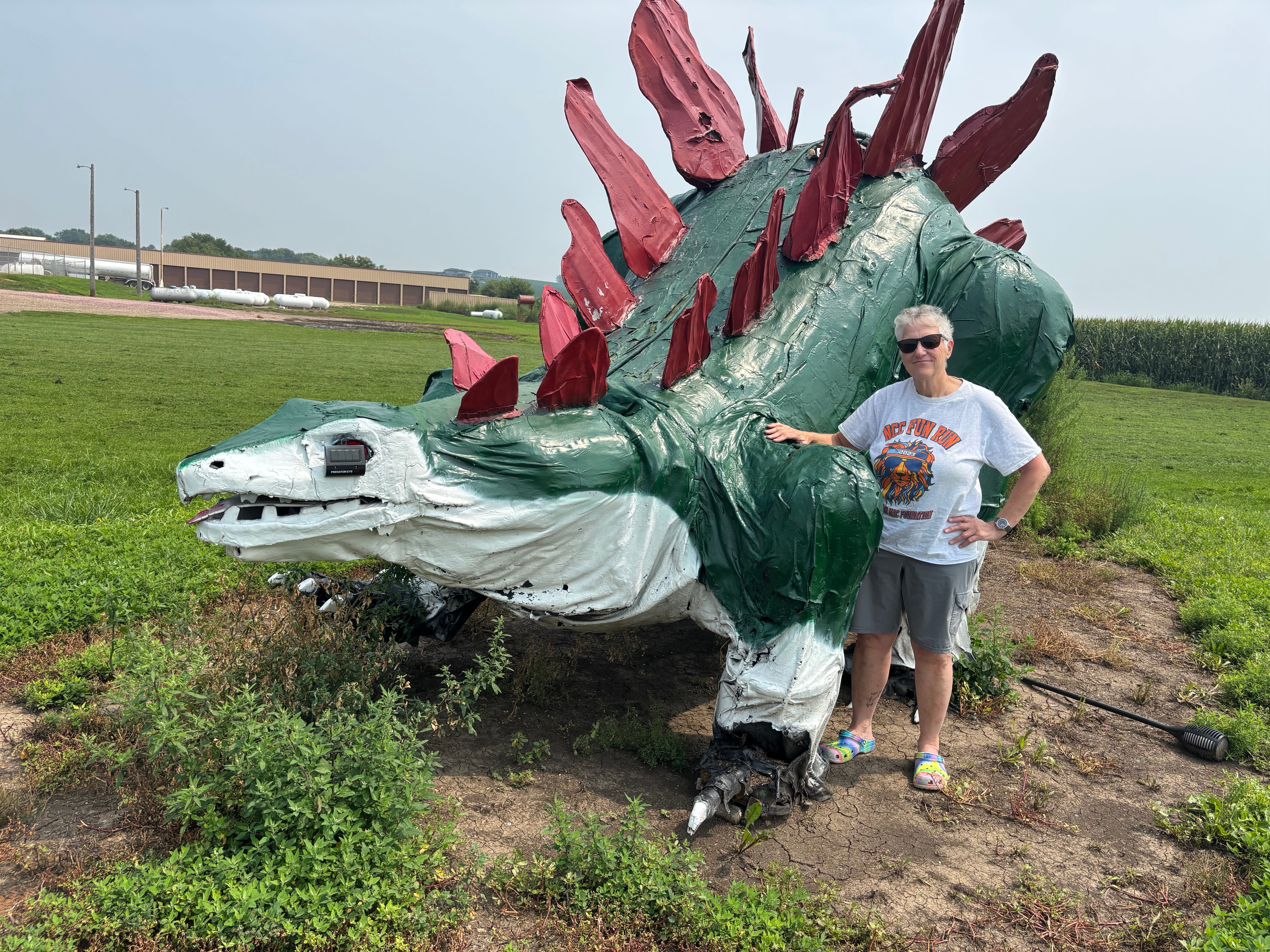
Next we came upon Warty Willy in Akron, Iowa. Willy is a stegosaurus that greets you as you enter Akron via Hwy 12. It was the first animatronic dinosaur invented, being created by two college professors to demonstrate the principals of engineering. When he first appeared, Willy could walk, wag his tail, open his mouth and waggle his tongue. Over time he stopped working and was never repaired. Willy is a bit beat up looking but still there.
Souix City, Iowa is home to Palmers Candy Company. Their signature item is called the Bing, chocolate and nuts covering a cherry soft center.


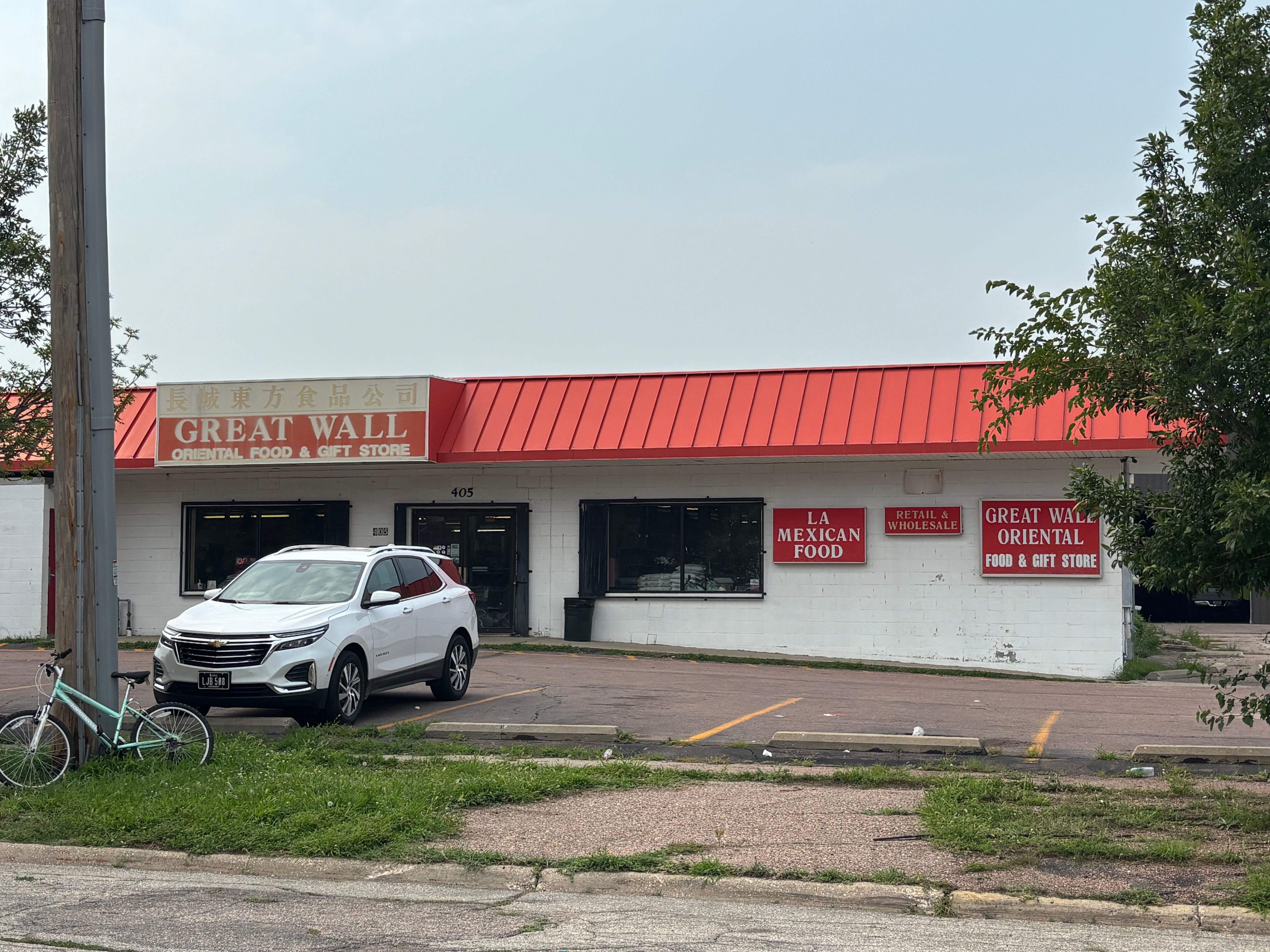
Across the street from Palmers was a strange restaurant, one with a combination I’ve never seen before.
This is our last night of camping in Iowa. Tomorrow we continue west and see what we can find in, of all places, Kansas!
Day 9
Here’s what we found interesting in Kansas:
The National Orphan Train Complex in Concordia. Started in 1854 by the Children’s Aid Society, orphans primarily from the east coast were sent to rural communities in the west and south where, according to the brochure, they “could be taken in by families who would teach them good morals and provide for their needs”. The train ran from New York City to Concordia. Children were put on the train and sent out to live with a new family in places including Arkansas, Iowa, Kansas, Nebraska, and Colorado. Many of these children were abandoned as infants or given up when one or both parents died. The stories displayed at the museum tell of both good and bad experiences for the children. By 1929 changes to the welfare system and growing objections to sending children so far away from their actual homes brought an end to the orphan train. Over 200,000 children were relocated in the 75 years the train ran.


The Geographic Center of the 48 Contiguous States, in the middle of nowhere Kansas. There are three markers and a small chapel marking the spot.
That was it for today in Kansas so far. We still have half of the state to travel through and I’ve already found a few places to investigate.
Love to read about your adventures.
Keep sending them😍